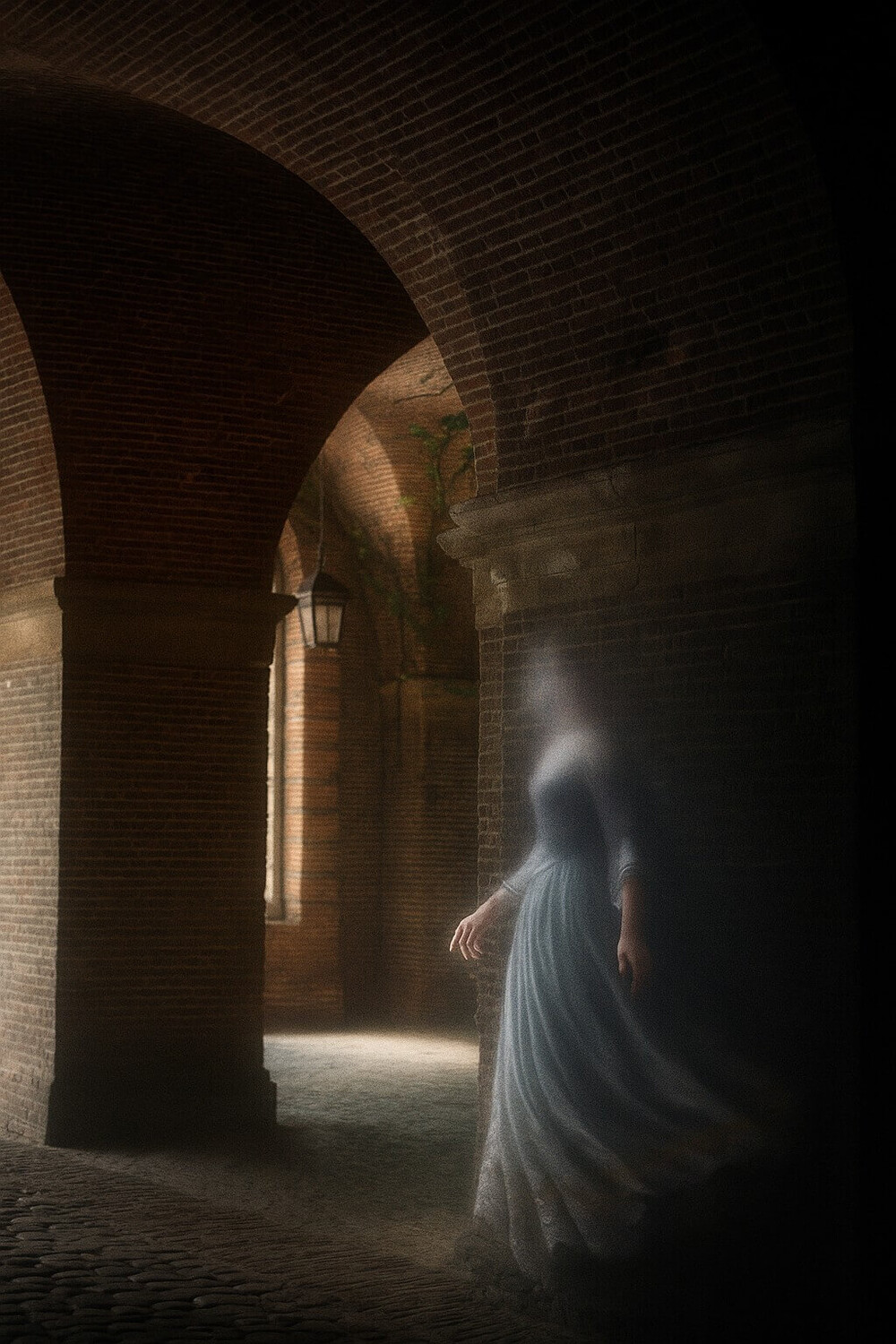
The Countess of Grave
The eternal love of Anna van Buren
Anyone walking along the Meuse in Grave on a quiet evening might just feel something. A shiver down the spine. A silence that feels just a little too full. The old residents know well: then she is watching again. The Countess. Anna van Buren.
In the year 1551, the young Countess Anna van Egmond, better known as Anna van Buren, married William of Nassau — the man who would later become known as William of Orange, Father of the Fatherland. Through their union, William gained access to vast territories in the Netherlands. Anna herself was the heiress of the County of Buren and Leerdam, and through her family also held rights to the Land van Cuijk, including the area around Grave.
Although her marriage was partly political, genuine love grew between the two. In their correspondence, they address each other with tender words. Anna regularly stayed at the family estates in the south. She is said to have taken Grave, with its castle on the Meuse, particularly to her heart. Here she wrote letters to her William, here their children grew up, and here she prayed for peace in a troubled country.
But life was fragile. In 1558, Anna fell ill—probably with tuberculosis—and died at the age of only 25. Her death left deep wounds. William of Orange would remarry, but his court later said that he never forgot “his true wife.” Her portrait remained hanging in his private quarters until his death.
Since then, stories have been circulating in Grave. About a woman clad in light grey-blue velvet who appears when the city is in danger. During the Siege of Grave in 1586, she was reportedly seen near the former castle, as a shadow amidst the firelight. A soldier is even said to have dropped his rifle, convinced that he had heard her soft voice: “Do not let the city fall.”
She is not a ghost, the elders say. Not a phantom to be afraid of. She is love. A promise. A woman who never let go of her country, her people, and her William.
And whoever walks along the ramparts of Grave on a quiet evening and sees the river glistening silently in the last light, may perhaps feel her presence. Not as a nightmare, but as a blessing. A silent protection. Eternal faithfulness.
Historical explanation
Anna van Egmond (1533–1558) was Countess of Buren and Leerdam and married William of Orange at a young age. Through their marriage, William gained considerable power in the Netherlands. Anna died young from illness but played an important role in the rise of the House of Orange. The area around Grave was part of her family's possessions, and she regularly stayed in the region. Although she was not officially known as "Lady of Grave," her presence in the Land van Cuijk is historically substantiated. Her marriage to William of Orange was a foundation for Dutch independence.